 🚨 The Growing Concern
Across schools today, one common pattern is becoming impossible to ignore:
Students are studying harder than ever, yet they are more confused, distracted, and uncertain about their future.
They score marks.
They clear exams.
But when asked a simple question —
“What do you want to become?”
The most common answer is: “I don’t know.”
This is not a capability problem.
It is a clarity and exposure problem.
🔍 What Has Changed in Today’s Generation?
1. 📱 Digital Distraction Overload
Students are constantly exposed to short-form content, instant entertainment, and dopamine-driven apps.
This conditions their brain to:
- Avoid effort
- Seek instant gratification
- Lose focus quickly
2. 🎯 Lack of Real-World Exposure
Most students only know:
- Doctor
- Engineer
- Lawyer
They are unaware of:
- Data Science
- UI/UX Design
- Entrepreneurship
- Digital Marketing
Without exposure, decision-making becomes impossible.
3. 🧠 Marks-Focused Education System
The system rewards:
- Memorization
- Repetition
But ignores:
- Thinking
- Creativity
- Problem-solving
Students become exam-ready, not life-ready.

4. 👨👩👧 Pressure Without Understanding
Parents want success for their children — but often:
- Compare them with others
- Focus only on marks
This creates:
- Fear
- Anxiety
- Loss of confidence
5. 👩🏫 Limited Teacher Bandwidth
Teachers are overburdened with:
- Syllabus completion
- Administrative work
They rarely get time to:
- Guide careers
- Build life skills
⚠️ The Real Problem
The issue is not with students.
It is a gap in the ecosystem:
Lack of guidance + lack of exposure + lack of skill development

✅ The Solution: Building Future-Ready Students
The answer lies in a structured, holistic approach that involves:
- Students
- Teachers
- Parents
🧒 1. Empowering Students with Clarity & Confidence
Students need more than textbooks.
They need:
✔ Self-Discovery
Understanding:
- Strengths
- Interests
- Personality
✔ Career Awareness
Exposure to:
- Multiple career paths
- Real-world job roles
✔ Skill Development
Core skills like:
- Communication
- Critical thinking
- Problem solving
✔ Mindset Training
Helping students:
- Overcome fear
- Build confidence
- Develop discipline
👩🏫 2. Empowering Teachers as Mentors
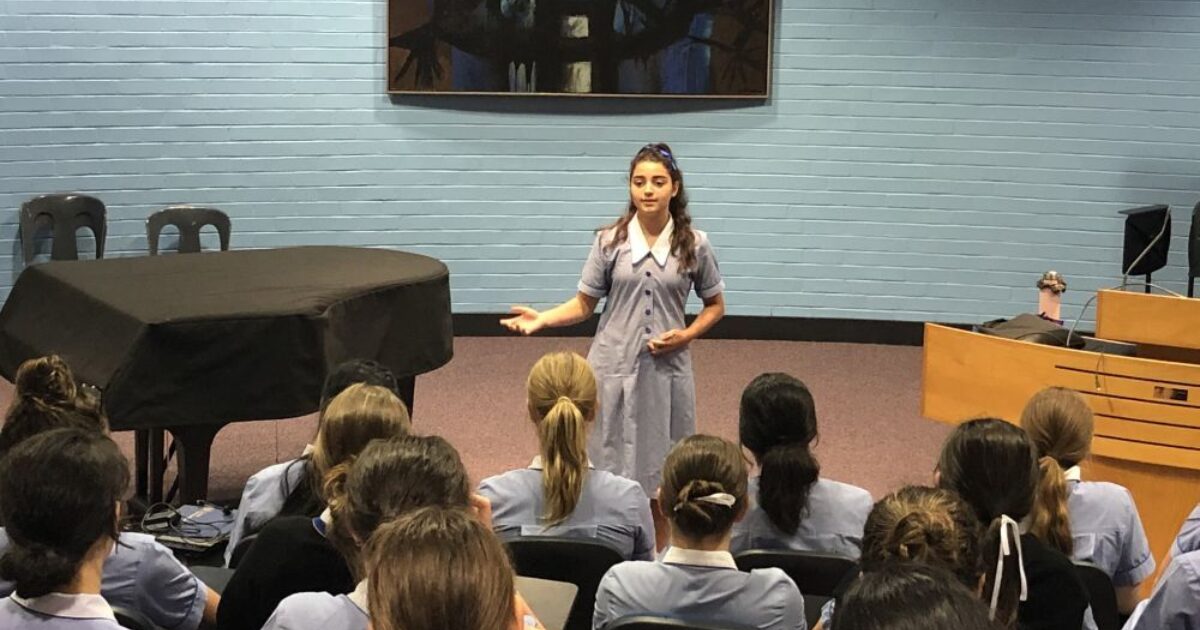
Teachers are the most powerful influence in a student’s life.
But they need support.
✔ Training in Student Engagement
- Activity-based teaching
- Real-life examples
✔ Ready-to-Use Toolkits
- Lesson plans
- Classroom activities
✔ Understanding Student Psychology
- Motivation triggers
- Handling fear and anxiety

The difference between a teacher and a mentor
lies mainly in their role, approach, and relationship with the learner.
While both guide learning, they do so in very different ways.
🔹 Teacher vs Mentor – Key
Differences
|
Aspect |
Teacher |
Mentor |
|
Primary Role |
Imparts knowledge and
skills |
Guides overall
personal and professional growth |
|
Focus |
Subject-based
learning (curriculum) |
Individual
development (career, mindset, life skills) |
|
Approach |
Structured, formal,
syllabus-driven |
Flexible, informal,
experience-driven |
|
Relationship |
Authority-based
(teacher–student) |
Trust-based
(advisor–mentee) |
|
Duration |
Usually short-term
(course or academic year) |
Often long-term,
evolving relationship |
|
Method |
Lectures,
assignments, assessments |
Conversations,
coaching, real-life advice |
|
Evaluation |
Tests, exams, grades |
Growth, confidence,
decision-making ability |
|
Dependency |
Student depends
on teacher for knowledge |
Mentor empowers
independence |
🔹 Simple Way to
Understand
- A teacher
helps you learn what is in the book 📘
- A mentor
helps you navigate life beyond the book 🌱
🔹 Example
- In a
school:
- A Math
teacher explains formulas and conducts exams
- A mentor
helps a student decide career paths, build confidence, and overcome
challenges
🔹 In Professional Context
(like your HR/training domain)
- A trainer/teacher:
Conducts structured programs (e.g., Policy Implementation, SOPs)
- A mentor:
Helps participants apply learning, shape leadership thinking, and grow in
their careers
🔹 Bottom Line
👉 Teachers transfer
knowledge
👉
Mentors transform individuals
👨👩👧 3. Empowering Parents as Enablers
Pressure → Support
✔ Encourage Exploration
Allow children to:
- Try
- Fail
- Learn
✔ Stop Comparison
Every child is different.
Comparison destroys confidence.
✔ Focus on Skills, Not Just Marks
The future belongs to:
- Skilled individuals
- Not just high scorers
Empowering Parents as Enablers – The Missing Link
While we continue to question students for their lack of focus, one uncomfortable question often remains unasked:
Where are the parents in the learning journey?
Over time, parenting in education has slowly shifted from active involvement to passive observation.
Attending PTMs, checking marks, and ensuring homework completion have become the benchmarks of “engaged parenting.”
But let’s be clear—
this is participation, not enablement.
🔹 The Real Problem Isn’t Just the Student
A child who lacks focus is often a reflection of an ecosystem that lacks structure.
- Unregulated screen time
- Absence of routine
- Conversations centred only around marks
- Minimal intellectual engagement at home
We cannot expect deep focus in classrooms when distraction is normalised at home.
🔹 Parents: From Monitors to Enablers

An enabling parent does not merely supervise learning—they shape the conditions for learning to happen.
This shift requires moving from:
-
“Did you finish your homework?”
to - “What did you understand today?”
From:
-
“How much did you score?”
to - “What challenged your thinking today?”
Because learning is not a reporting activity—it is a thinking process.
🔹 Focus Is Not Taught, It Is Cultivated
Schools can design lessons.
Teachers can deliver content.
But focus, discipline, and consistency are built at home.
A child who grows in an environment with:
- Defined routines
- Reduced distractions
- Encouraged curiosity
- Emotional security
will naturally demonstrate higher engagement and concentration.
🔹 The Blame Game Must End
The most convenient escape today is mutual blame:
- Parents blaming schools
- Schools blaming students
But the truth is simple:
👉 Student success is a shared responsibility
👉 And currently, that partnership is broken
🔹 A Shift in Perspective
Perhaps the question we should be asking is not:
❌ Why are students not focusing?
But rather:
✅ How are we enabling them to focus?
🔹 Final Thought
Schools may educate the mind
But parents condition the mindset
And unless parents evolve from being observers of education to enablers of learning,
the problem of student focus will continue—regardless of curriculum, pedagogy, or technology.
🔹 LinkedIn Version (Crisp, Impactful Post)
Are students really losing focus… or are we failing to enable it?
We often blame:
- Students → for distraction
- Teachers → for delivery
- Technology → for disruption
But rarely do we ask:
👉 What role are parents playing today?
Most parenting today is reactive, not enabling:
✔ Checking marks
✔ Attending PTMs
✔ Monitoring homework
But missing:
❌ Building routines
❌ Encouraging thinking
❌ Creating a distraction-free environment
Here’s the reality:
👉 Focus is not taught in schools
👉 It is cultivated at home
A child’s ability to concentrate is shaped by:
- Structure
- Discipline
- Emotional security
- Intellectual conversations
Not just textbooks.
The real shift needed:
Stop asking
❌ Why is my child not focusing?
Start asking
✅ How am I enabling my child to focus?
Because…
Schools teach subjects.
Parents shape learners.
🚀 The Way Forward: Future Readiness Programs in Schools

Schools must evolve from:
“Education providers” → “Life preparation ecosystems”
A structured Future Readiness Program can include:
- Self-discovery modules
- Career awareness sessions
- Skill-building workshops
- Confidence and mindset training
- Parent and teacher integration
💡 Final Thought
Students don’t lack ambition.
They lack direction.

When we give them:
- Clarity
- Exposure
- Support
They don’t just succeed in exams —
They succeed in life.
📣 About Us
At Compass Clock Consultancy, we specialize in building future-ready students through structured programs that empower:
- Students
- Teachers
- Parents
🔔 Call to Action
If you are a:
- School leader
- Educator
- Parent
It’s time to rethink education.
👉 Let’s prepare students not just for exams — but for life.
1. 🎯 No Clarity of “Why”
School students:
- Study for marks, not purpose
- Don’t see connection between subjects and real life
👉 Result: Low intrinsic motivation
2. 📱 Dopamine Distraction (Digital Overload)
- Short-form content (Reels, Shorts)
- Gaming, instant gratification
👉 Brain gets wired to:
“Quick reward → avoid effort”
3. 🧠 Fear-Based Education System
- Marks = identity
- Failure = shame
👉 Students choose:
- Safe path
- Avoid challenges
4. 👨👩👧 Parent Pressure vs Understanding
Parents often:
- Compare children
- Focus only on marks
👉 Child develops:
- Anxiety OR rebellion
5. 👩🏫 Teacher Constraint
Teachers:
- Focus on syllabus completion
- Lack time/tools for life skills
👉 Students miss:
- Career awareness
- Real-world exposure
6. 🌍 No Exposure to Possibilities
Students don’t know:
- What careers exist
- What skills are needed
👉 So they default to:
“Engineering / Medical / Confusion”
⚠️ The real problem
It’s not lack of talent.
It’s a broken ecosystem of:
Awareness + Motivation + Guidance + Exposure
✅ How to FIX this (3-Level Approach)
🧒 LEVEL 1: Empower STUDENTS
1. 🎥 Make Learning Relatable
Instead of theory:
- Use movies, real-life examples, case studies
Example:
- Physics → Car braking system
- Maths → EMI, salary, business profit
2. 🧩 Introduce “Mini Career Exposure”
Weekly:
- 1 career spotlight (Data Analyst, Designer, Doctor, Entrepreneur)
👉 Show:
- What they do
- Salary range
- Skills needed
3. 🎯 Gamify Growth
Create:
- Skill challenges
- Badges / certificates
- Leaderboards
👉 Replace marks-only mindset
4. 💬 Build Confidence Early
Activities:
- Public speaking
- Group discussions
- Problem-solving games
👉 Confidence = future success multiplier
5. 🛠 Introduce “Life Skills Curriculum”
Must include:
- Communication
- Critical thinking
- Financial literacy
- Decision-making
👩🏫 LEVEL 2: Empower TEACHERS
Teachers are your biggest leverage point.
1. 🧠 Train Teachers in “Facilitation Mode”
Shift from:
“Content delivery” → “Student engagement”
Train them to:
- Ask questions
- Encourage thinking
- Use storytelling
2. 🎯 Give Ready-to-Use Toolkits
Provide:
- Activity-based lesson plans
- Real-life examples
- Discussion prompts
👉 Reduce their workload → increase impact
3. 📊 Teach “Student Psychology Basics”
Help teachers understand:
- Motivation triggers
- Fear vs curiosity learning
4. 🏆 Recognize Teachers Publicly
- “Most impactful teacher” awards
- Showcase success stories
👉 Motivated teachers = motivated students
5. 📹 Use Hybrid Learning Tools
- Short videos
- Interactive sessions
👉 Keeps students engaged
👨👩👧 LEVEL 3: Empower PARENTS
Parents are the silent decision-makers.
1. 🧠 Parent Awareness Sessions
Educate them on:
- Future job market
- Skills vs marks importance
2. 🚫 Stop Comparison Culture
Train parents to:
- Compare child with their own past performance
- Not with others
3. 💬 Improve Parent-Child Communication
Teach:
- Listening without judgment
- Encouraging curiosity
4. 🎯 Align Expectations with Reality
Explain:
- Not all students need same career path
- Multiple success routes exist
5. 📅 Involve Parents in Growth Journey
- Monthly progress sessions
- Skill-based reports (not just marks)
🚀 Ideal Program You Can Build (High Impact Model)
🔹 “Future Readiness Program for Schools”
Structure:
Duration: 4–8 weeks
Audience: Grade 8–12
Module 1: Self Discovery
- Strengths, interests
- Personality mapping
Module 2: Career Awareness
- 10+ modern careers
- Industry exposure
Module 3: Skill Building
- Communication
- Problem solving
- Basic digital skills
Module 4: Confidence & Mindset
- Handling failure
- Growth mindset
Module 5: Parent + Teacher Integration
- Workshops
- Alignment sessions
💡 Key Insight
Students don’t need motivation
They need clarity + exposure + support system


No comments:
Post a Comment